Alone in the Room: Why the Sharpest Executives Protect Their Right to Think Without an Audience
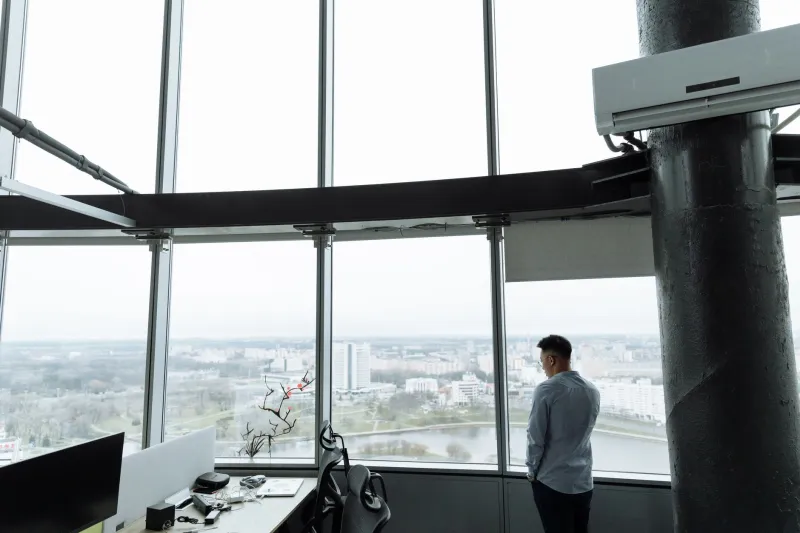
There is a particular kind of silence that high-performing executives have learned to fear. Not the silence of a failed product launch or a missed earnings call—but the silence that follows when someone in a conference room says something that nobody else has already agreed to. That silence, brief and loaded, has trained an entire generation of organizational leaders to pre-clear their thinking before they speak it aloud.
The result is not collaboration. It is choreography.
The Meeting as a Thought-Prevention Machine
American corporations have spent the better part of two decades optimizing for alignment. Cross-functional teams, standing syncs, working groups, and all-hands sessions have been institutionalized as proof of healthy culture. And in many respects, they are. But there is a cost that rarely appears on any organizational audit: the systematic erosion of individual intellectual courage.
When a leader knows that every idea will be immediately socialized, workshopped, and stress-tested by a room full of peers, the rational response is to arrive with ideas that are already defensible. Rough thinking gets smoothed before it ever reaches the table. Genuinely unconventional perspectives get quietly discarded in the elevator on the way up to the meeting. What survives is the thinking that was already, in some form, acceptable.
This is not a failure of character. It is a predictable response to incentive structures that reward consensus and implicitly penalize the awkward friction of original thought.
When Alignment Becomes the Destination
There is a meaningful difference between alignment as a tool and alignment as a goal. Used well, alignment accelerates execution once a direction has been chosen. When it becomes the goal itself, however, it subtly reframes the entire strategic process. The question shifts from What is the right answer? to What answer can we all live with?
Those are not the same question. And in fast-moving markets, confusing them is expensive.
Some of the most consequential business decisions in recent American corporate history were made by leaders willing to hold a position before it was popular—often in direct opposition to prevailing internal consensus. Reed Hastings's early conviction that Netflix should move toward streaming when its DVD business was still thriving. Howard Schultz's repeated willingness to bet on a premium coffee experience when conventional retail wisdom argued otherwise. These were not decisions born in committee. They were positions formed in intellectual solitude, then defended with enough rigor to eventually earn organizational buy-in.
The solitude came first. The consensus came after—and only because someone was willing to think alone long enough to develop a view worth following.
The Psychological Safety Paradox
Organizations talk extensively about psychological safety, and rightly so. The research supporting its value is substantial. But there is a version of psychological safety that has been subtly misapplied in practice: the kind that makes it safe to speak, but only after you have already confirmed that what you are about to say will be well-received.
True psychological safety—the kind that actually produces innovation—must protect something harder to defend. It must make room for the leader who walks into a strategy session with a position that contradicts the prevailing narrative. It must tolerate the executive who says, without apology, I have been thinking about this differently, and I am not yet ready to be talked out of it.
Building that kind of culture requires more than a statement of values. It requires leaders at the top who model intellectual independence visibly and consistently—who demonstrate that thinking alone is not a sign of poor collaboration, but evidence of serious preparation.
Reclaiming Intellectual Solitude as a Strategic Asset
The executives who consistently outperform their peers over long time horizons tend to share a habit that is rarely celebrated in leadership literature: they protect unstructured, uninterrupted thinking time with the same discipline they apply to their most important meetings.
This is not daydreaming. It is a rigorous practice of sitting with a problem long enough for non-obvious connections to emerge—connections that are impossible to find when every moment of cognitive space is filled with someone else's agenda.
Practically, this looks different for different leaders. Some block early morning hours before the organization wakes up. Others maintain a weekly half-day that appears on their calendar simply as unavailable. A number of senior executives have described keeping a private working document—separate from any shared system—where they develop positions over weeks before ever introducing them to the team.
The common thread is intentionality. These leaders have decided, explicitly, that their most valuable contribution to the organization is not their availability. It is the quality of their judgment. And they have recognized that judgment requires inputs that no meeting can provide.
Contrarian Thinking Is Not the Same as Obstruction
It is worth being precise here, because the argument for independent thinking is sometimes misread as an argument for ego-driven resistance. That is not the case.
The goal is not to be contrary for its own sake, or to position intellectual isolation as a leadership virtue in itself. The goal is to ensure that when a leader does arrive at a position, it has been stress-tested against their own best thinking—not just against the path of least organizational resistance.
Leaders who do this well tend to be more persuasive, not less, when they finally engage the room. They have already anticipated the strongest objections. They have already asked themselves the uncomfortable questions. The position they present is not a draft—it is a conviction, which is a fundamentally different thing to defend.
What the Organization Owes Its Thinkers
This is ultimately a two-directional challenge. Individual leaders must reclaim the practice of thinking independently. But the organizations they lead must stop punishing them for it.
That means examining which behaviors actually get rewarded in leadership reviews. It means asking whether the executives who consistently challenge prevailing assumptions are being developed or quietly marginalized. It means building meeting cultures where a leader can say I want to sit with this before I weigh in without that being interpreted as disengagement.
The organizations that solve this problem will not look dramatically different from the outside. Their calendars may even look busier. But somewhere in the structure, they will have carved out protected space for something that cannot be scheduled, delegated, or crowd-sourced: the moment when one clear-eyed leader, alone in a room, decides what they actually think.
That moment is where competitive advantage is still made.